
WATER RESOURCES OF TAJIKISTAN
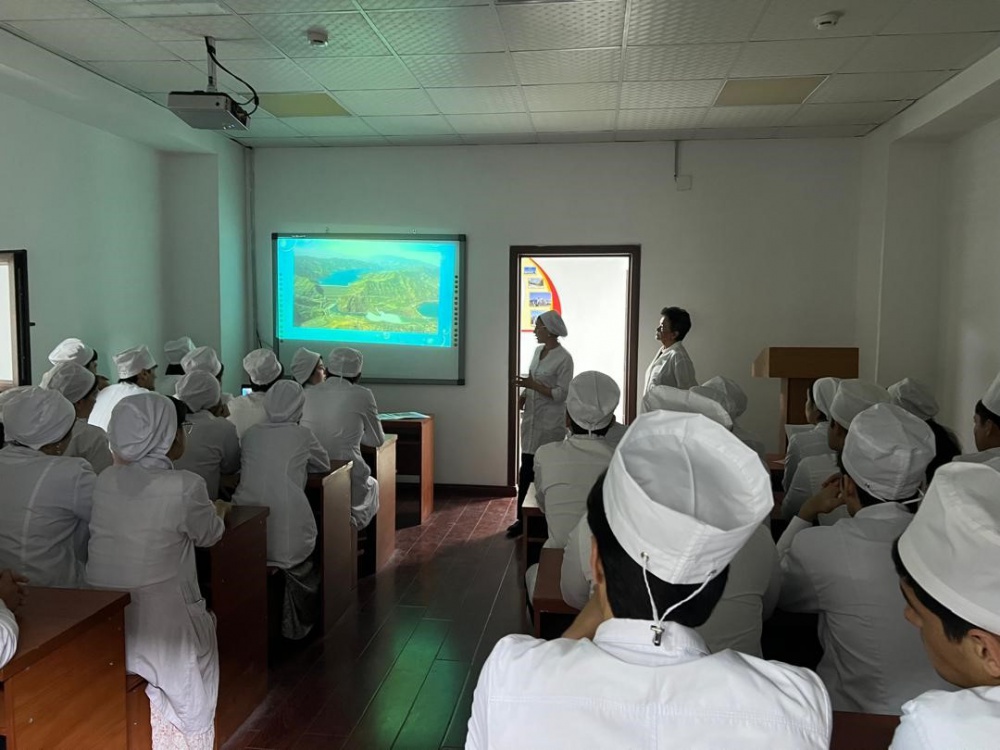
On September 28, 2024, the department of propaedeutics of children’s diseases of the SEI “Avicenna Tajik State Medical University” under the guidance of senior instructor Kadyrova M.R., conducted an open lesson on "Water Resources of Tajikistan". The session was attended by department staff and third-year pediatric students from the 4th and 5th curatorial groups.
Water resources are vital to the sustainable development of Tajikistan, largely due to the country's vast reserves of fresh water. Water is the primary source of energy in Tajikistan, with over 95% of the country's electricity generated by hydroelectric power plants. Additionally, water resources support irrigated agriculture, which accounts for nearly 80% of the nation's agricultural production, as well as providing for drinking water supply, sanitation, industry, and fisheries. These sectors are instrumental in ensuring food security and access to quality nutrition for the population.
Tajikistan's rivers are among its most valuable assets. There are 947 rivers flowing through the country, with a total length exceeding 28,500 kilometers. Lakes such as Sarez and Yashilkulku rank among the world's highest mountain lakes. The total water surface area of Tajikistan's lakes is approximately 1,005 square kilometers, about 1% of the country’s total area. Among the largest bodies of water are the Tajik Sea, Nurek, Farhod, Boighozi, Kattasoy, Muminabad, Dakhanasoy, Sangtuda 1, Sangtuda 2, Roghun, and Sarband.
Glaciers: Tajikistan is home to 14,509 glaciers, covering a total area of 11,146 km², which constitutes approximately 8% of the country's total land area.
Mineral Waters of Tajikistan: The country's most productive mineral springs, Obigarm and Khoja Obigarm, are located within the Gissar range. Other notable springs include Shaambary, Anzob, Faizabad, Istaravshan, as well as the thermal and therapeutic springs of Khavatag, Taboshar, Adrasman, Yavroz, Karatag, Babatag, Garmchashma, Aivaj, Bakhmyr, and Ellis, among others.
Department of propaedeutics of children’s diseases
translated by Ismoilov R.