
THE ROLE OF AVICENNA TAJIK STATE MEDICAL UNIVERSITY IN THE ADVANCEMENT OF THE PHARMACEUTICAL FIELD
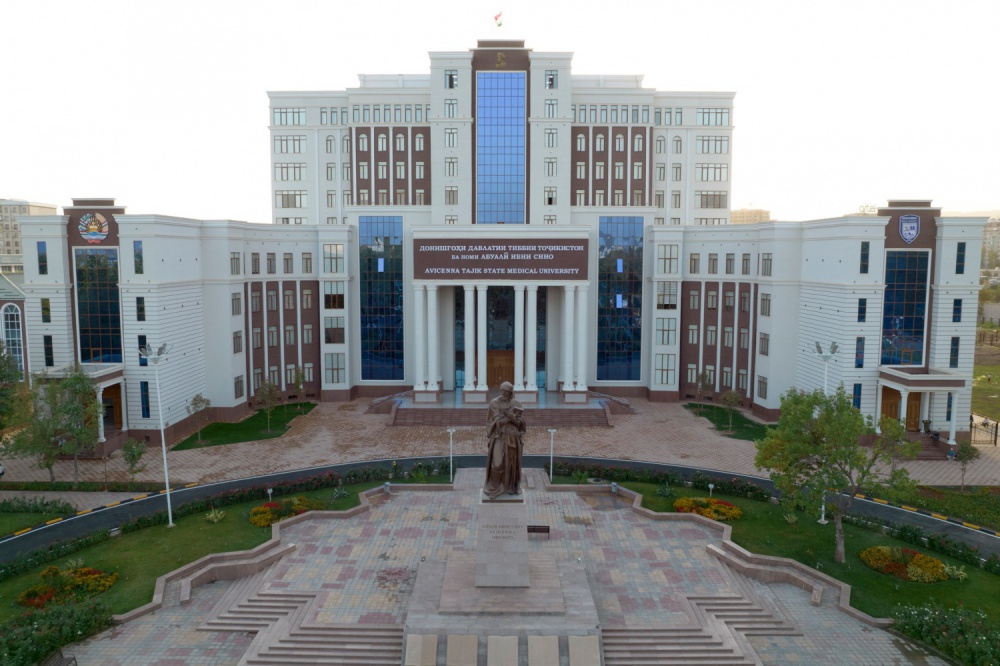
Since gaining independence, the State and Government of Tajikistan have prioritized the smooth advancement of key societal sectors - social protection, science and education, healthcare, and culture - as central pillars of their policy, implementing comprehensive measures to achieve these objectives. In light of climate change, shifts in food composition, population growth, and other contributing factors, the demand for pharmaceuticals is steadily increasing. Experts emphasize the necessity of establishing stronger foundations for the development of the country's pharmaceutical industry to adequately meet the population’s needs. In the Republic of Tajikistan, the efficient functioning of the pharmaceutical sector is a crucial component of the healthcare system, with its primary focus on safeguarding and promoting the health of its citizens.
With the support of the government, the 'State Program for the Development of the Pharmaceutical Industry in the Republic of Tajikistan for 2021-2025 was approved by Decree №569 of the Government of the Republic of Tajikistan, dated October 28, 2020. The primary objective of this program is to ensure the sustainable development of the pharmaceutical sector. Within the framework of the nation's fourth strategic goal - the rapid industrialization of the country - it aims to improve public access to medicines and medical products, attract investments, establish new production enterprises, and create employment opportunities. The program addresses the responsibilities, challenges, and solutions related to advancing the pharmaceutical industry. Therefore, it emphasizes increasing the share of domestically produced medicines. The pharmaceutical sector has been steadily growing, and currently, 60 domestic pharmaceutical enterprises are operating within the country, producing more than 560 types of medicinal products, medical goods, as well as processing and packaging medicinal plants. In line with the social policy of the President of the Republic of Tajikistan, Honorable Emomali Rahmon, and under state support, continuous efforts are being made to develop the workforce in the pharmaceutical industry. Currently, a significant portion of the activities within secondary and higher professional institutions in the country is dedicated to the training of pharmaceutical professionals. Avicenna Tajik State Medical University, one of the most esteemed institutions of higher education in Tajikistan, plays a central role in preparing specialists in healthcare. Following the directives of President Emomali Rahmon, the university established the educational, scientific, and production center «Pharmacy» which operates in accordance with the legal framework of the Republic of Tajikistan.
The organization and facilitation of educational trainings, seminars, and roundtable discussions constitute key responsibilities of the Educational, Scientific, and Production Center «Pharmacy» at Avicenna Tajik State Medical University. This year, with the participation of domestic and international scholars, faculty, and students, the center hosted various educational events focused on pharmaceuticals. These included seminars on topics such as «Potential Use of Indigenous Medicinal Plants for Hemorrhoids», «Classification of Medicinal Products According to the ATC System», «Cardiac Glycosides», «Challenges in the Pharmaceutical Market of Tajikistan», «Drug Use in Acute Myocardial Infarction», «The Republic of Tajikistan’s Essential Medicines List», «Drug Classification by Anatomical-Therapeutic-Chemical (ATC) Properties», «Drugs in the Treatment of Cardiac Arrhythmia», «Antiretroviral Drug Use for HIV Treatment», and «Effective Medication Utilization».
It is noteworthy that the production of medicinal products constitutes a key area of focus for the Educational, Scientific, and Production Center «Pharmacy». The center comprises a main building, an annex, a warehouse, five rooms, a lecture hall, a herbarium, and a laboratory under the Department of Pharmaceutical Chemistry and Toxicology, all equipped with state-of-the-art pharmaceutical technologies. This year, the center processed 4,006 boxes of 20 varieties of indigenous medicinal plants, which were made available for patient treatment. Additionally, the center produced and distributed 1,000 bags of black seed oil, 400 paper packages of dibazol powder for children, and 1,000 units each of iodine alcohol solution, brilliant green alcohol solution, and chloramphenicol alcohol solution, among others. In total, 57 types of medicinal products are processed and circulated by the University’s Educational, Scientific, and Production Center «Pharmacy» in response to demand.
An additional mechanism for advancing the pharmaceutical industry is aligning the production processes of pharmaceuticals and medical products with international standards of quality and safety, including Good Manufacturing Practice (GMP), Good Clinical Practice (GCP), and Good Laboratory Practice (GLP).
Consequently, the establishment and operation of enterprises for the domestic production of pharmaceuticals, coupled with the implementation of state benefits and guarantees for efficient pharmaceutical operations, as well as the education and retraining of skilled professionals in reputable domestic and foreign institutions, will contribute to the development of the pharmaceutical sector in the Republic of Tajikistan. This will enhance the production volume of high - quality domestic pharmaceuticals and meet the increasing demand for medicines among citizens.
Valiev Davlatyor
journalist of the rector’s Service
translated by Ismoilov R.