

THE PHILOSOPHY OF MATERIALISM IN THE WORKS OF ABU ALI IBN SINA
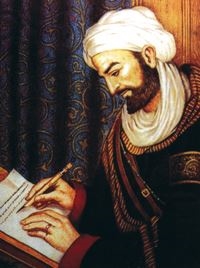
Exceptional individuals like Abu Ali ibn Sina are born rarely, and the challenge of their lives lies in being far ahead of their time, often resulting in a lack of recognition from contemporary society and the prevailing ideological framework. His life and work coincided with the rule of the Turkic Ghaznavid dynasty under Mahmud of Ghazni. Unlike the Samanid rulers, who greatly valued scholars and scientific advancements, Mahmud had little appreciation for science and prioritized military pursuits. The era of Abu Ali ibn Sina, Al-Biruni, Nosiri Khusraw, and other representatives of Tajik-Persian scholarship coincided with the decline of the Golden Age of the multilingual peoples of Central Asia, which came to an end following the rise to power of Sultan Mahmud of Ghazni. The life and contributions of Abu Ali ibn Sina have been extensively studied by scholars both in Tajikistan and internationally. The examination of his works is closely linked to the study of historical events of that period, which significantly influenced his intellectual and philosophical development.
Valuable insights into these historical events, as well as into the life of Abu Ali ibn Sina, can be found in the research of Academician V.V. Bartold and E.E. Bertels, as well as in scientific studies on the history of Tajikistan. Furthermore, the works of Tajik scholars, including A. Abdulloev, S.K. Mullojonov, and Dinorshoev, provide critical perspectives on his legacy.
Additionally, primary historical sources such as Ta'rih-i Yamini by Abu Nasr Utbi, which documents the reign of Sultan Mahmud Ghaznavi, and the writings of Abul-Fazl Bayhaqi, an official at the Ghaznavid court who played a key role in compiling the dynasty’s history, hold significant value in the study of Abu Ali ibn Sina’s life and work.
At a very early age, Abu Ali ibn Sina recognized the profound significance of human existence. This realization was acknowledged by both his father and his mentor, Natili. Anticipating threats to his philosophical and scientific ideas, as well as obstacles to the advancement of his knowledge, he departed from the domain of Sultan Mahmud and traveled westward toward Iran. After enduring persecution under Sultan Mahmud, he eventually arrived in Isfahan. Reflecting on his experiences, Ibn Sina wrote:
"Here, I have reached the end—death, a natural death—for I perceive people as trees perceive them, or as mountains do. I no longer engage in human affairs, nor do I partake in their joys or affections. Now, you cannot kill me: for the living, I am dead; but for the pursuit of Truth, I remain alive."
This article explores the materialistic concepts of Abu Ali Ibn Sina and examines their connection to philosophical principles, particularly in relation to materialism. A fundamental tenet of materialist philosophy is the law of unity and the struggle of opposites. Ibn Sina argued that life evolves through the interaction of two opposing forces change and preservation. According to his perspective, change signifies life, whereas preservation equates to stagnation or decline. Developing the theory of the unity and struggle of opposites, Abu Ali ibn Sina (Avicenna) integrated it into his medical teachings. He conceptualized disease as the antithesis of a healthy state and formulated the doctrine of “irritant therapy,” wherein certain diseases could serve as treatments for others. In The Canon of Medicine, Ibn Sina, emphasizing the unity of opposites, observed that “four-day fever alleviates malignant diseases, melancholy, and stupor.” In 1927, Julius Wagner-Jauregg was awarded the Nobel Prize for his work on fever therapy—an approach that had been previously explored by Ibn Sina.
The philosophy of Abu Ali ibn Sina was highly esteemed in the West. The historian of philosophy, A. Guaçon, wrote the following about Abu Ali ibn Sina in 1969:
“The deeper we study medieval Western philosophy, the more we realize that Avicenna was not only a foundational source but also a key figure shaping their intellectual tradition. He was among the highest authorities to whom the West turned after St. Augustine, Aristotle, and Bonaventure. Although his theories were debated and sometimes refuted, their profound influence is undeniable. It is impossible to determine how the course of Western thought in the Middle Ages would have unfolded without Avicenna’s contributions.”
Abdurahmonov Z. V.- Associate professor of the department of social subjects