THE PARTICULARITIES OF NATIONAL TRADITIONS AND THEIR INFLUENCE ON THE SELF-CONSCIOUSNESS OF THE PEOPLE
How do the nations and peoples of our planet differ?
Differences arise from climatic and geographical conditions, historical development, industrial and economic characteristics, and linguistic diversity. Most notably, each nation possesses distinct traditions and customs that are unique to its cultural identity.
Every nation evolves within relatively specific historical, climatic, geographical, and social contexts. These factors shape and influence its way of life, traditions, family structures, and social relationships. Such conditions also play a crucial role in the formation of self-awareness and behavioral patterns, particularly among the younger generation.
The persistence of folk traditions ensures the continuity of a people's culture. However, the cultures of past and present eras can differ significantly due to various influencing factors, including industrial progress, technological advancements, widespread Internet access, migration, and the increasing unification of populations from different regions. These processes often lead to a blending and transformation of traditions and customs, reflecting the dynamic nature of modern cultural development.
Folk traditions embody the centuries-old collective experiences of peoples, transforming them into a cultural heritage that remains relevant in modern societies. The power and influence of these traditions stem from their rich and accumulated life experiences, which over time deeply penetrate the consciousness of individuals, shaping their psychology and social behavior. Simultaneously, these traditions evolve, fostering new cultural relations and adapting to societal changes.
As such, folk traditions are integral to the social and political consciousness of a population. Each generation undergoes socialization through the inherited experiences of preceding generations, preserving traditions and rituals as significant historical and cultural values. In contemporary society, folk traditions—rooted in specific cultural contexts - continue to adapt and exert influence, particularly on the worldview of younger generations.
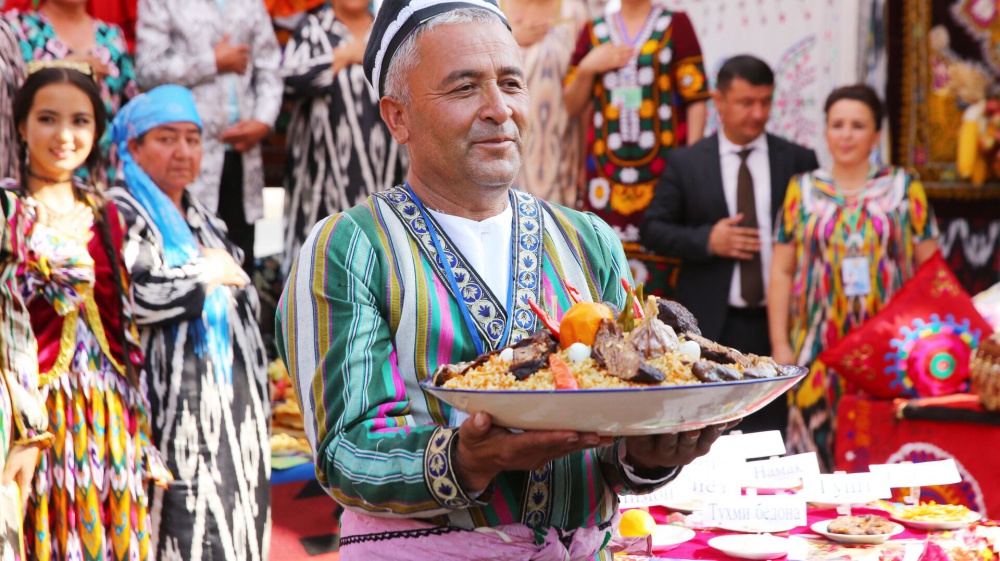
The traditions of the Tajik people, in particular, have developed over centuries, reflecting their resilience and adaptability while shaping the cultural identity of the nation.
The traditional costume of Tajiks across various regions exhibited unique local characteristics while sharing common features. Today, the national dress of Tajik women continues to dominate, preserving traditional elements reflective of the past. Certain communal customs, such as mutual assistance and collective efforts, for instance in production artels, have persisted in modern Tajik society. Collective activities, particularly during religious and folk holidays, also display significant similarities. Navruz, one of the most cherished traditional holidays, is celebrated at the onset of spring and remains a symbol of cultural continuity.
Currently, the ongoing transformation processes necessitate the institutionalization of traditions and the study of public opinion. The effective integration of folk traditions into modern political life serves as a crucial mechanism for fostering ethnic stability and enhancing national self-awareness.
Hasanova D.M., assistant of the department of histology
Translated by Ismoilov R.