
THE NATIONAL FLAG -A SYMBOL OF INDEPENDENCE, FREEDOM AND SOVEREIGN STATEHOOD
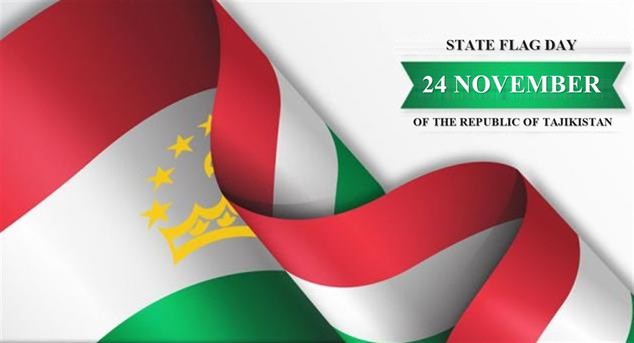
The state flag of the Republic of Tajikistan is one of the main symbols of the state, embodying its sovereignty and identity. At the 16th session of the Supreme Council in Khujand, issues on which the very existence of the independent state depended were discussed. It was there, on 24 November, that the new state flag was approved. Since then, its history has been inseparable from the first years of sovereign Tajikistan. The flag was officially adopted in 1992.
The chief artist and head of the team of authors who created the modern State flag of the Republic of Tajikistan is People's artist of Tajikistan Zukhur Khabibullaev. The design of the flag was developed in 1992 by a creative group that, together with him, included Anatoly Zanevsky (designer), Larisa Dodkhudoeva (art historian) and Irina Ignatushina (art historian). This design won the national competition and was officially approved by the Supreme Council of Tajikistan on 24 November 1992.
The main flagpole of Tajikistan in Dushanbe was officially entered in the Guinness book of Records in 2011 as the tallest free-standing flagpole in the world. The ceremonial presentation of the Guinness World Records certificate was timed to coincide with the 20th anniversary of the republic's independence. The mast is 165 m high, the flag measures 30 × 60 m, with an area of 1,800 m² and a weight of about 420 kg. The Dushanbe flagpole held the world record for more than three years, until September 2014. Today Tajikistan remains among the top 10 tallest flagpoles in the world, in 5th place.
State Flag Day is celebrated in the republic every year on 24 November. The flag of the Republic of Tajikistan is one of the official state symbols, along with the coat of arms and the national anthem. This symbol unites the citizens of the country regardless of their nationality, religion or political views.
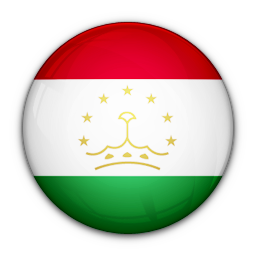
The Tajik flag is recognized by its three horizontal stripes. The top stripe is red, the middle one is white and the bottom one is green; the white stripe is wider than the other two. In the center are a golden crown and seven stars arranged in a semicircle. This combination of colors and images has become one of the best-known state emblems of Tajikistan. It appears on documents, in the decoration of official events, on the buildings of diplomatic missions and in materials for international meetings. The meaning of the colors is explained in different ways, drawing on the history of the country and traditional ideas about its values. Red is associated with courage, resilience and the struggle for freedom. White is usually explained as a sign of peace, purity and good intentions. Green recalls nature, life, labour and the hope for prosperity. Behind the colors of the flag stands the experience of many generations. The crown is traditionally associated with independent statehood and historical continuity. The seven stars form part of the central composition of the flag, and cultural tradition offers different interpretations of their image.
“During the years of independence, dozens of large and hundreds and thousands of important industrial and social facilities have been built and erected in our country under the State Flag. This is the fruit of the united, patriotic labour of the country's residents, and it contributes to the sustainable development of the national economy, the strengthening of the power of the state and the unprecedented prosperity of our beloved Motherland.” Emomali Rahmon
In 2026, the Republic of Tajikistan celebrated the 35th anniversary of its State Independence. During this time, the Tajik people have gone through severe trials and great changes. Cities changed, educational institutions opened, and science and culture developed. The modern flag was adopted at the very beginning of this journey and has remained an unchanged state symbol for decades.
Although flag Day is not a public holiday, it is recognized as a state holiday and is marked every year by mass events. The holiday is held to foster respect for state symbols. On this day, ceremonial events take place: themed concerts, flash mobs, lectures, exhibitions, folk festivities and sports competitions. State flags are hung on houses and streets, avenues and squares of cities and villages. When we raise the flag of Tajikistan on important dates and holidays, we express our love and devotion to the Motherland. This symbol of unity should always remind us of our common goal - the prosperity and well-being of our country.
Flag Day plays an important role in strengthening patriotism and national identity. It serves as a reminder of the path the people travelled to independence and helps strengthen friendship among the various ethnic groups living in our republic.
“I am absolutely confident that every single resident of the country will continue, under the State Flag, to expand and multiply the work of creation and improvement for the sake of the greater prosperity of our beloved Motherland, the strengthening of the economic power of our independent state and the raising of its prestige in the international arena.” Emomali Rahmon
Department of propaedeutics of children's diseases