


THE GARDEN FESTIVAL MARKS THE ARRIVAL OF SPRING
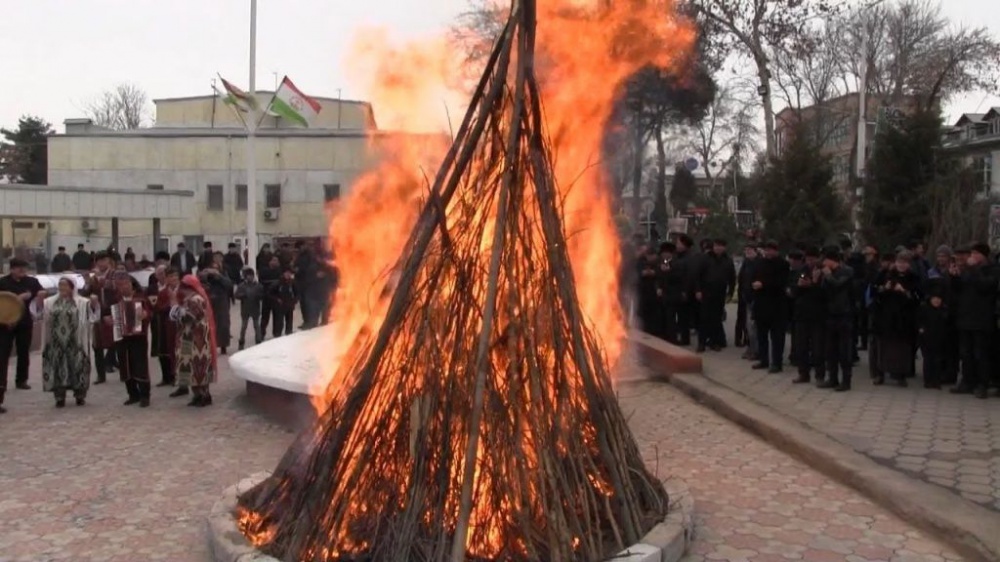
It is a matter of great pride that The Founder of Peace and National Unity – Leader of the Nation, the President of the Republic of Tajikistan Honorable Emomali Rahmon has made significant efforts to revive the traditions and customs of our ancestors, fostering a return to their historical heritage and national identity. Sada is one of the most ancient seasonal and folk festivals of the Aryan civilization, traditionally celebrated on the 10th day of the month of Bahman in the solar calendar, corresponding to the transition from the 30th night to the 31st day of January. This festival occurs 40 days after the Night of Yalda, marking the end of the harshest winter period. Historically, Sada was observed as a fire-worship ritual and a celebration of the greatness of Mehr.
At the initiative of the great Leader of the Nation, Emomali Rahmon, January 30 is officially celebrated each year with great enthusiasm in our culturally rich country. Historically, during this time, people—particularly farmers—engaged in essential agricultural activities such as digging canals, cleaning gutters and streets, cultivating the land, fertilizing it, and preparing seeds for planting.
In accordance with ancestral traditions, festival cooks decorate traditional breads such as chapoti, flatbread, fatir, and kalama, along with amang and various fruits, while preparing dishes primarily made from grains. Among the most significant festive dishes are kurutob, umoch, and dalda, which hold special importance on this day.
Today, alongside other national celebrations, Sada is observed as an official holiday. On this occasion, the Founder of Peace and National Unity—Leader of the Nation, President of the Republic of Tajikistan, Honorable Emomali Rahmon rightly stated: “…As ancient historical sources indicate, our ancestors wore purple festive robes on this day and exchanged congratulatory messages with their best wishes. This holiday serves as a reminder of the Aryan era, with its origins attributed in historical and literary sources to the legendary wrestler Khushan. Among these sources, Abulkasim Firdawsi, in his Shahnameh, recounts the establishment of the Sada holiday through the story of Shah Khushan. According to the narrative, one day, Shah Khushan went hunting with his relatives and encountered a large snake in the mountains. In an attempt to drive it away, he hurled a large stone at it. Although the snake retreated, the stone struck another, producing sparks that ignited the dry brush. Until that moment, people had not known how to create fire. Khushan and his companions, overjoyed by this newfound discovery, perceived it as a divine blessing. In gratitude, Shah Khushan thanked God for revealing the secret of fire to humanity and returned to his city to commemorate the event.”
The Sada Festival is one of the seasonal and ceremonial celebrations of the Aryan people, including the ancestors of the Tajiks. It was recognized as a symbol of the greatness of Mithra (Mehr), a preparation for spring sowing, and a harbinger of Nowruz. Sada also signified the midwinter transition, bringing the first signs of spring and preparing farmers for agricultural work. With its bright flames, the festival symbolically connected the cold of winter with the warmth and light of spring. For fifty days and nights, people eagerly anticipated the arrival of the grand spring celebration and the original New Year—Navruz.
Sh. Makhmudova - Senior lecturer at the department of public health and medical statistics with a course in the history of medicine