

THE COMMISSION VISITED THE DEPARTMENT OF CHILDREN’S DISEASES №1
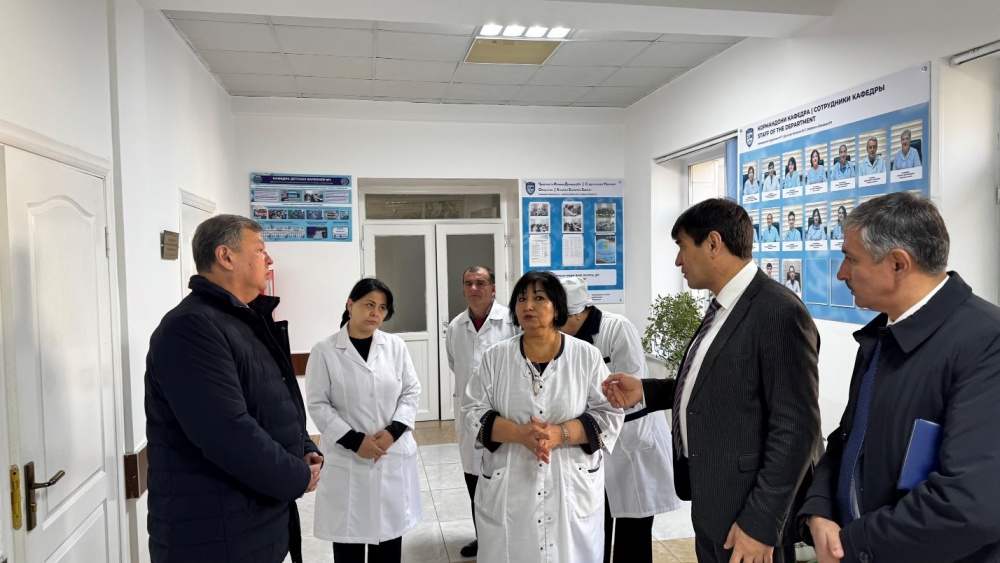
On December 12, 2024, the department of children’s diseases №1, named after Aminov H.Ch., was visited by external experts as part of the international institutional and program accreditation process of Avicenna Tajik State Medical University. The visit held significant importance in affirming the department's high standards of educational and scientific activities. During the visit, the experts observed training sessions conducted for 4th- and 5th-year medical faculty students and thoroughly examined the department's material and technical resources, educational and methodological base, and innovative approaches to the teaching process.
For fifth-year medical students (Groups 1–3), classes employing a similar Case-Based Learning (CBL) method were conducted on the topic 'Central Nervous System Lesions in Newborns'. These sessions highlighted how senior students utilized their previously acquired knowledge and skills to model complex clinical scenarios. Additionally, they showcased how instructors encouraged students to explore solutions, discuss alternative diagnostic and therapeutic approaches, which the committee members recognized as a crucial component of students' professional development.
The members of the commission were thoroughly acquainted with the department's equipment, including the integration of modern technologies into the educational process. They were introduced to the cloud data storage system, which enables both students and teachers to access educational materials in electronic format by scanning QR codes. Furthermore, students have the opportunity to provide feedback to the department through dedicated QR codes, allowing the department to promptly address their requests and suggestions, thereby enhancing the quality of the educational process.
In addition, the department's chatbot was demonstrated, which provides access to class schedules, exam questions, syllabi, and other educational resources while also facilitating interaction between students and lecturers. The experts noted that the implementation of such technologies not only streamlines access to learning materials but also significantly increases student engagement.
The visit highlighted the exceptional quality of educational activities within the department of children’s diseases №1. Key factors contributing to the department's educational excellence include the integration of modern technologies, the application of innovative teaching methods, the active engagement of students in the learning process, and the expertise of highly qualified teaching staff. The experts expressed their appreciation for the well-organized educational process and recommended disseminating the department's successful practices to other units within the university.