


TERRORISM AND EXTREMISM
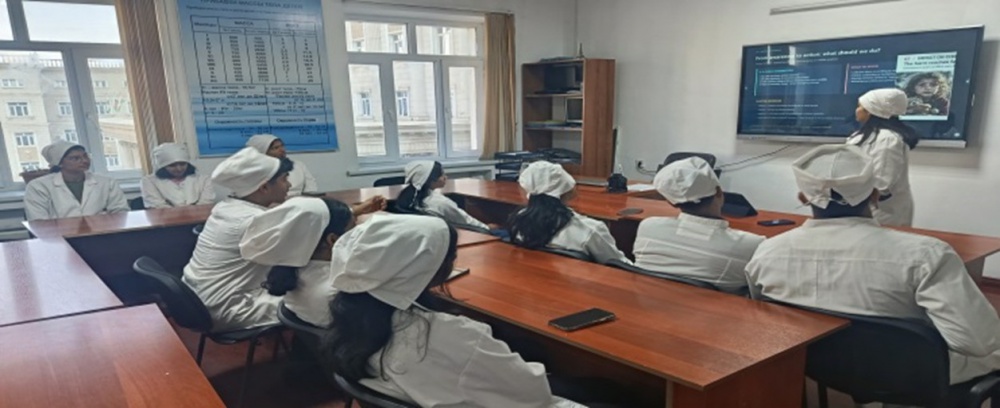
On October 29th 2026 year at the department of propaedeutics of children's diseases of the SEI “ATSMU” under the guidance assistant Rakhmatullaeva M.A. was held an open lesson on the topic: “Terrorism and extremism”. Presentation was prepared by foreign bachelor students of 3rd course 6th group Muhammad Junaid, Jony Cristo and Navas Nasna. Presentation was very relevant and interesting.
Extremist ideas - beliefs that reject pluralism, deny equal rights, or claim that one group must dominate others. Violent extremism-supporting, justifying or using violence to pursue ideological, political, religious, or identity-based goals. Extremism is not limited to one religion, ethnicity, nationality, or political camp. Push and conditions around a person: poverty or blocked opportunities, discrimination and humiliation, corruption, repression, or weak rule of law, unresolved conflict and displacement, lack of safe spaces, services, or trust. Why are children and adolescents especially vulnerable? Identity: Adolescents explore who they are and where they belong, anger, fear, grief, or humiliation can narrow attention, critical thinking and source-checking need practice, children may rely on adults or armed actors for safety and survival. How children may be drawn into extremist violence? Online exposure: short videos, conspiracy claims, private chats, and repeated hateful content. Relationships: friends, relatives, influencers, or recruiters offer attention and belonging. Crisis and coercion: armed groups may threaten families, abduct children, or exploit survival needs. Children associated with armed groups may be used as messengers, scouts, cooks, guards, porters, or fighters. Girls face specific risks of sexual and gender-based violence. Why the effects are felt around the world. Displacement, separated families, interrupted schooling, and pressure on host communities. Emergency laws, polarisation, security spending, and disputes over civil liberties. Economic changes: damage to infrastructure, lost investment, disrupted trade, and long-term service costs. From awareness to action: what should we do? Stay calm and listen without shaming. Ask open questions; do not interrogate or label, involve a trained safeguarding professional when risk is credible, if there is immediate danger, contact emergency services. What to avoid: collective blame or profiling by religion/ethnicity, publicly confronting or humiliating the child, sharing extremist content to “expose” it, assuming one online post proves intent or imminent violence.
Department of propaedeutics of children's diseases