NATIONAL UNITY IS A HISTORICAL SYMBOL OF THE TAJIK WORLD
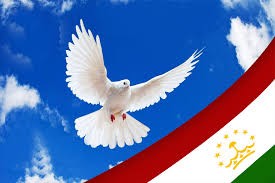
Unity is not only a concept of moral value, but also the basis of national existence, a pillar of social stability and the basis of real state–building for any society with a long history. The history of mankind shows that stable civilizations and states were formed precisely on the basis of unity, integrity and mutual understanding of social forces. The idea of unity has become widespread not only in the context of politics and government, but also in the context of culture, literature, mysticism, and social morality. Our classical poets, such as Rudaki, Firdowsi, Khayyam, Saadi, Jami and others, see unity not only as an external unity, but also as a spiritual and spiritual unity. Firdavsi in his"The Shahnameh has always defended the unity of the nation, language, country and identity. The hadith says: "Indeed, Allah is Forgiving, Merciful, and Merciful" (Surah Al-Baqara, verse 10). In mystical teaching, unity is considered as the highest stage of self-knowledge and the achievement of divine enlightenment. From the point of view of social science, national unity is supported by only two factors: historical self-awareness and social tolerance. The people say that the people say that the people-the people. It is thanks to this unity that over the past twenty-five years our country has been able to transform from a vulnerable State into a country with strong security and independence. Peaceful experiments show that peace begins, not ends, with the signing of an act. Deep political, social and cultural measures are needed to strengthen it. Led by this leader, who possessed historical power, Emomali Rahmon and his co-religionist policies implemented many measures, including:
- Restoration of destroyed infrastructure, including roads, schools, medical institutions and government centers, which directly contributed to the restoration of social life;
- The repatriation of more than a million refugees and migrants, which has become one of the most difficult post-war processes;
- The institutionalization of unity, as exemplified by the creation of the National reconciliation commission, the development of moderate legislation and the inclusion of opposition forces in political life;
- implementation of a policy of tolerance and pluralism based on the principles of freedom of conscience, free activity of political parties and independent media;
- Strengthening the rule of law and the rule of law, which laid the foundation for preventing the resurgence of political scandals and restoring justice;
- economic and social development, implemented through investment programs, the involvement of friendly countries and the creation of new infrastructure.
The important point of this peace process is that all these measures were based on the concept of unity as a central political and moral norm. At this stage, unity was not only an external unification of political groups, but also the unity of national will and views, the revival of the spiritual identity of Tajik society. It is thanks to this unity that Tajikistan's war-torn society has become a stable, secure and developing society.
Today, more than 28 years after the beginning of the world, Tajikistan is recognized as an independent and secure country in the region. The huge structures, including the Rogun power plant, dozens of schools, hundreds of bridges and roads, hospitals, social programs and cultural events face up, are a clear sign not only of peaceful politics, but also of a life based on unity. The celebration of national unity in 2026 -the celebration of the 29th anniversary of historical peace - marks a new stage of national awakening and global evolution. This holiday is the embodiment of the historical wisdom of the Tajik people, spiritual fortitude and service to a historical figure who leaves a great lesson for the next generation and the world community. Today, Emomali Rahmon, as the leader of the nation, is seen not only as a symbol of peace and unity in Tajikistan, but also as an example of political leadership in modern conflicts.
Today, the task of the younger generation, scientists and the academic community is to preserve the heritage of unity, develop and expand it in new scientific and practical forms. The opinions of domestic and foreign researchers should become a learning model in broad scientific research, international conferences and training programs. Thus, the experience of Tajik peacemaking and the personality of the nation's leader as an example of “national diplomacy and value unity" should underpin historical, political, social and cultural research. He was merciful to those who did good, and to those who did evil, and to those who did evil, and to those who did evil, and to those who did evil, and to those who did evil. In particular, destroyed infrastructure was restored, refugees were repatriated, a national reconciliation commission was established, conciliatory and democratic legislation was developed, and unity was adopted as a central value. All these steps formed the basis for the construction of a modern Tajik state. As a result, Tajikistan has transformed from a war-torn country into a secure, stable and developing State. Strategic steps, including the construction of the Rogun power plant, dozens of schools, hospitals, roads, tunnels and hundreds of other facilities, combined with the implementation of social and scientific programs have shown that the country has entered a new era of revival. Today, in 2026, when the 29th anniversary of the Tajik world is celebrated, the national and international community recognizes the experience of the Tajik world as a source of learning, a lesson in tolerance and a successful example of domestic policy. Today, Emomali Rahmon, as the leader of the nation, stands among the key figures in the history of Tajik statehood. He not only brought peace, but also laid new foundations for national statehood, political stability, and cultural identity.
It was thanks to a wise leader and a co-religionist policy that Tajikistan was able to establish itself among the post-Soviet states as an independent, calm and stable state. Today, the task of the younger generation, researchers and the scientific community is to preserve, explore and introduce into world practice this precious heritage of peace and unity as a model of learning and sustainable development. Tajikistan's bright future is embodied in the fact that, thanks to peace and stability, national unity, the use of scientific and intellectual resources and the strengthening of international relations, the country will become a new Center for sustainable development in Central Asia. This goal is achieved by increasing the level of education, national identity and strengthening the role of science and education.
Turdi-Akhanova Iroda.-Teacher of the Department of Foreign Languages