


MEDICINAL PROPERTIES OF RASPBERRIES
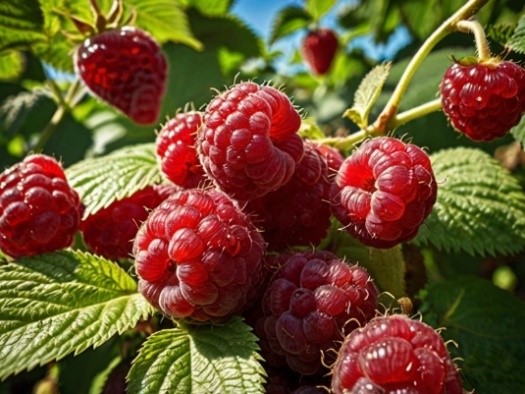
Raspberry (Latin: Fructus Rubi idaei) is a deciduous semi-shrub with a perennial rhizome.
The fruit is typically red, ranging from pink to deep burgundy, though yellow and black varieties also exist. Raspberries are known for their beneficial effects on various physiological systems and possess a complex array of bioactive properties.
The fruit contains up to 11% sugars (glucose, fructose, pentose), trace amounts of essential oils, fiber, flavonoids, pectin, proteins, and mucilage. It also comprises 1–2% organic acids (malic, citric, tartaric, salicylic, etc.), alcohols (wine, isoamyl alcohol), ketones (acetoin, diacetyl, β-ionone), anthocyanins, catechins, and up to 0.3% tannins. Additionally, raspberries contain saturated and polyunsaturated fatty acids, with their small seeds holding up to 22% fatty oil. The fruit is also rich in essential minerals such as manganese, calcium, magnesium, potassium, and iron, along with vitamins E, B-complex, C, and K.
Raspberries provide approximately 32 mg of vitamin C per 100 g, covering about 43% of the recommended daily intake for women and 36% for men.
The benefits of raspberries for colds, flu, and sore throats are well known. From childhood, many of us have been familiar with the traditional remedy of hot raspberry tea, which alleviates sore throats, reduces fever, and exhibits diaphoretic properties. Due to its salicylic acid content, raspberry infusion serves as a natural antiseptic and possesses antipyretic properties. Additionally, it strengthens the immune system, enhancing resistance to bacterial and viral infections. The presence of ascorbic acid promotes collagen synthesis, which is essential for maintaining healthy skin and hair.
There is evidence suggesting that an infusion made from raspberry berries and leaves may be beneficial for anemia, hypertension, atherosclerosis, joint diseases, and nervous system disorders. It also aids in regulating blood sugar levels, improving digestive health and peristalsis, and supporting intestinal microflora.
Raspberry fruits are rich in antioxidants and exhibit potent antioxidant effects due to their high concentration of vitamin C. Antioxidants play a crucial role in delaying and preventing certain forms of cellular damage while mitigating oxidative stress caused by free radicals. Moreover, they possess anti-inflammatory properties that help protect against premature aging and reduce the risk of cardiovascular diseases and cancer.
Raspberries can be dried using dryers at a temperature of 50–60°C by spreading the raw material in a thin layer on cloth or paper. In medicine, dried raspberries are used as a diaphoretic, while raspberry syrup is employed to enhance the flavor of medicinal mixtures. Additionally, raspberry leaves can serve as a tea substitute.
In cosmetology, raspberry seed oil—extracted through first cold pressing without further refining—is widely used. This oil is suitable for all skin types, including the delicate areas around the eyes and lips, as well as for the décolletage, hands (cuticles and nails), and hair.
Individuals prone to allergic reactions, those with specific food intolerances, or those taking medications from the enalapril group should avoid consuming raspberries. Additionally, excessive consumption of these sweet-sour fruits is not recommended for individuals with gout or bronchial asthma. Pregnant women should consult their physician before consuming raspberries.
Urunova M. V. - Department of pharmacology
translated by Ismoilov R.