


GLOBAL CLIMATE CHANGE
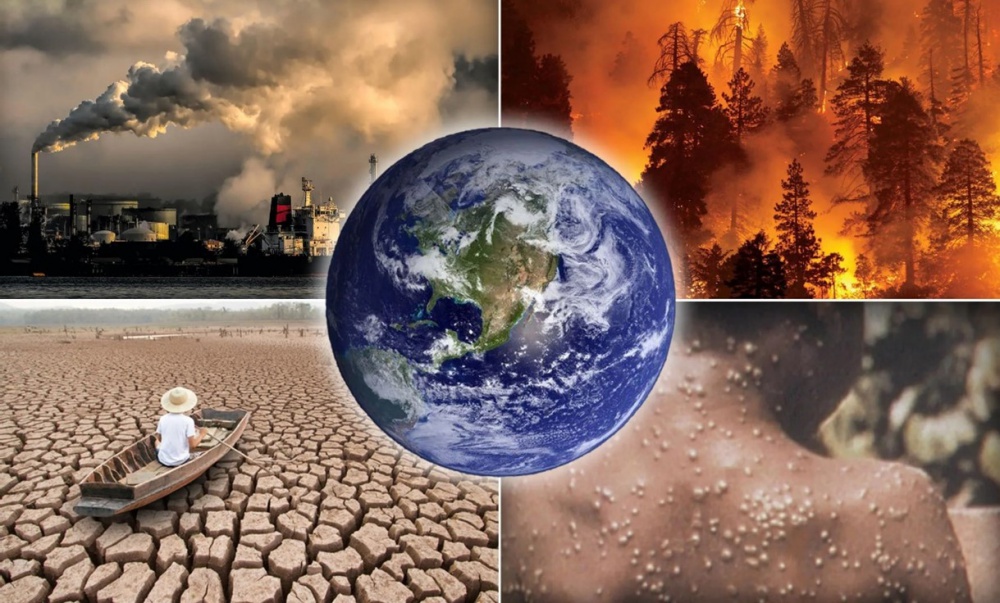
“The Earth is a fine place and worth fighting for.”
Ernest Hemingway
Global warming is not a vague threat from a distant future but a real problem of today — it is the gradual increase in the average air temperature on our planet. However, it is more accurate to call this process global climate change, because the problems are not limited to the fact that the air is getting warmer.
The fact that the Earth retains heat thanks to the presence of certain gases and particles in the atmosphere was first discussed in the 19th century. As early as 1824, the French scientist Joseph Fourier described the greenhouse effect. Later, it was established that water vapor and carbon dioxide trap heat in the atmosphere. The measurement of CO₂ levels in the atmosphere began in 1958 at the Mauna Loa Observatory. These data clearly showed that the concentration of carbon dioxide is increasing, and therefore more heat is being retained on the planet than before. Gradually, international organizations joined the discussion. In 1988, the UN established the Intergovernmental Panel on Climate Change (IPCC), which publishes the most authoritative reports on what is happening on Earth and what to expect next. The main driver of changes is greenhouse gases, particularly CO₂. They accumulate in the atmosphere and create a “blanket effect,” trapping heat.
Main Sources and Causes of Greenhouse Gases:
- Burning fossil fuels for energy production.
- Vehicle emissions.
- Industrial production.
- Agriculture, especially livestock farming, which generates methane.
- Massive deforestation, reducing the planet’s ability to absorb CO₂.
Over the past 140 years, the average temperature on Earth has risen by about 1.1°C, resulting in melting glaciers in Antarctica and Greenland, rising sea levels, warming seas and oceans, coastal flooding threats, increased frequency and strength of hurricanes, droughts, floods, and fires, decreased forest areas, and migration or extinction of animal species. Signs of these changes include abnormal heat, sharp temperature fluctuations, and unstable winters. The main international document addressing this issue is the Paris Climate Agreement of 2015. Almost all countries of the world agreed to limit the rise in global temperature to 1.5–2°C compared to pre-industrial levels. Companies and states are developing ESG initiatives, reducing emissions, and investing in environmental projects. Solar and wind power plants, electric vehicles, and hydrogen energy are developing.
However, there are many obstacles: slow reforms, hydrocarbon industry lobbying, and misconceptions among politicians who do not believe in the seriousness of the threat. If emissions are not reduced, by the end of the century the average temperature could rise by 2.4–4.4°C, leading to even more severe disasters and mass climate migrations. Many regions of the planet will become uninhabitable, and where the climate remains tolerable, overpopulation will be inevitable. If action is taken — massive transition to renewable energy, modernization of transport and industry, and forest restoration — warming can be slowed.
How Individuals can help protect the environment:
- Use public transport or bicycles instead of personal cars.
- Reduce meat consumption, especially beef.
- Shop consciously and avoid food waste.
- Support eco-initiatives, separate waste collection, and recycling.
All of this helps to build a culture of responsibility.
Every person should follow recommendations to reduce resource use and pollution:
- Do not throw away food to reduce food waste.
- Consume more plant-based foods, which require fewer resources to produce.
- Use less water.
- Reduce plastic use to lower soil pollution.
These small individual efforts complement global measures to combat warming. The combined efforts of all humanity will help prevent a critical rise in the planet’s average temperature. The sooner humanity acts in a coordinated way, the greater the chance of keeping the climate stable.
Consequences of Climate Change Include:
- Increased mortality, higher injury rates, and negative impacts on human health.
- Malnutrition due to reduced food production in drought-prone areas.
- Adverse effects on people with cardiovascular, respiratory, and upper respiratory tract diseases.
- Increased incidence of diseases linked to poor-quality food and water.
- Rising mental health disorders due to loss of work capacity and decreased productivity, especially among vulnerable populations.
Climatologists warn that by 2100, there will be on average 57 more extremely hot days per year than today. Without emission reductions, this number is expected to double.
The most significant consequences of global warming:
- Sea level rise (currently increasing by about 2.6–2.9 mm per year over the last 30 years, and projected to rise by 52–98 cm by the end of the 21st century) caused by the expansion of warm water and melting glaciers, leading to the loss of human habitats.
- More frequent extreme weather events: hurricanes, heavy rains, floods, droughts, and river drying.
- Extinction of biological species due to changing temperature regimes (especially coastal and island species).
- Threats to food security caused by crop failures due to warming.
The entire global community is striving to counteract global warming. Combating unwanted climate change and creating the most comfortable living and economic conditions for people is the task of geoengineering. Humanity will have to find ways to slow down the climate change process in order to survive.
Department of propaedeutics of children diseases