


ENVIRONMENTAL PROBLEMS OF THE ENVIRONMENT
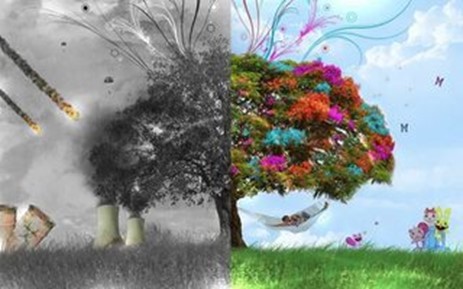
"Pollution should never be the price to pay for prosperity."
Al Gore
The environment is what surrounds a person, what he breathes, eats and drinks. Nature and people are an inseparable system. If the environment is destroyed, man will not be able to survive. Pollution is an acute problem on a global scale. It began when people learned to influence the biosphere: cattle breeding, agriculture, industry, etc. There are many reasons, but the most obvious is human activity. Changes in the Earth's ecology caused by human actions range from indirect depletion caused by a change in the Earth's physical and chemical environment, leading to direct depletion of all living things. In today's world, natural change is occurring rapidly, fueled by unlimited population growth and technological development.
An environmental problem is a problem that disrupts the normal functioning of the environment. Global problems are associated with the impact on the biosphere as a whole, on all ecosystems and species on the planet. According to a WHO report, 99% of the world's population breathes polluted air. Excessive pollutants that pose a serious risk to human health include particulate matter, carbon dioxide, ozone, nitrogen dioxide and Sulphur dioxide. They are a serious source of morbidity and mortality.
Today, the population of our planet is more than 8.3 billion people, while the population growth is about 70 million people per year. All the inhabitants of the planet need food, clothing, warmth and education. Humans consume resources and also produce a huge amount of waste, and this number continues to grow. The impact of so many people on the environment manifests itself in two main forms, namely the huge consumption of resources (land, food, water, air, fuel and minerals) and waste (air and water pollution, greenhouse gases). There are many additional factors. Such a large population gives rise to urbanization processes, the level and rate of growth of which vary significantly from region to region. The growth of urbanization can lead to a large number of changes in a particular area. The so-called urban population interacts with their environment. Natural features of the landscape (trees, etc.) are removed and new structures are placed. The world's technological progress has a positive impact on people's lives, but in some cases negatively on the environment. For many years, scientists have been actively developing ways to change the Earth's environment to control the global climate. Protecting the environment is crucial for the survival and future of humanity. Today, environmental degradation and climate change have affected every inhabitant of the planet. The whole world must be one to overcome this problem. But poor countries, which mostly depend on the natural environment for their existence, need the help of developed countries to be able to solve environmental problems in a modern civilized way.
From the very beginning of the development of civilization, the population of our planet has constantly sought to protect and preserve the environment. This ancient tradition of preserving the environment is especially reflected in our time. Each state is a party to almost all conventions, declarations, conferences and protocols dedicated to the protection of environmental law (Stockholm Declaration, United Nations Environment Program, Rio Declaration, Kyoto Protocol, etc.). The judicial system and legislation of modern states strive to create an effective international base, supported by judicial precedent, so that it is possible to form a solid basis for judicial practice in the field of environmental law. Each country has effective legislation on the environment (nature management). The environment has taken a central place in global politics, which is really relevant and significant.
Environment-related indicators of recent decades have effectively highlighted clear global issues such as urbanization and biodiversity loss; agricultural production and deforestation; the withdrawal of fresh water and the growing shortage of fresh water; electricity generation and greenhouse gas emissions.
The results of practical and enforcement activities also represent the progress made by countries in achieving many of the environmental goals set out in the 2030 Agenda for Sustainable Development. In recent years, there has been a growing trend for organizations to use an effective human rights protection system to address environmental issues. A number of international legal standards developed by the Council of Europe, including the European Convention on Human Rights, the European Social Charter and the Bern Convention on the Conservation of European Wildlife and Natural Habitats, have been successfully applied to facilitate progress in addressing environmental issues.
Environmental protection focuses on solving problems arising from the interaction between people and ecological systems, and includes issues related to conservation, pollution, loss of biodiversity, land degradation or environmental policy. Environmental protection is one of the main prerequisites for the overall development of any country in the world. As awareness of environmental protection, nature management and consequences develops, so does human awareness of the need to preserve the environment by preventing adverse impacts on nature. Man, and nature are a single whole. Humans will not be able to exist if the environment dies, so everyone must do their part to save our planet. The first and most important step towards this is to stop the consumerist attitude to the environment. People are used to only taking, and they are often not ready to give.
Each of us can do the following to preserve the environment:
- plant trees (trees are a source of oxygen production, so the more of them, the better the air quality);
- walk or use public transport (it is not necessary to refuse to travel by private car, in good weather you can walk to the store or work, public transport also emits exhaust gases into the atmosphere, but less than 20 cars);
- sort garbage, especially non-degradable and toxic waste (plastic, glass, metal, batteries, light bulbs, etc.);
- refuse to use plastic, instead of plastic bags, you can use eco-friendly fabric bags;
- creation of a compost pit on the site. Food waste can be disposed of in it, which will help improve the environment, as well as make the soil more fertile;
- Do not burn leaves and garbage;
- refuse vehicles with an internal combustion engine;
- quit smoking.
Due to the development of science, new technologies and human activity, the environment suffers. In the near future, this may lead to an environmental disaster, so it is necessary to take action to protect nature. The fight against air pollution should be carried out at the macro and micro levels. Most countries in the world adopt laws that limit the levels of emissions of harmful substances into the atmosphere by enterprises. Each of us can contribute to the fight against air pollution.
Department of propaedeutics of children's diseases