

DEVELOPMENT OF HUMAN CAPITAL AND TRAINING OF SPECIALISTS IN THE ADDRESS OF THE LEADER OF THE NATION, HIS EXCELLENCY EMOMALI RAHMON
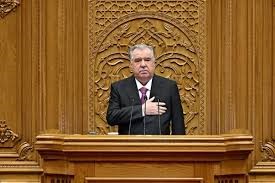
In the context of the rapidly changing modern world, where science and technology are developing at a fast pace, the issue of human capital development has become one of the key factors of state progress. The Republic of Tajikistan, fully aware of this reality, has defined the development of education, science, and the training of highly qualified specialists as a priority direction of state policy. In this regard, the Address of the President of the Republic of Tajikistan, His Excellency Emomali Rahmon, to the Majlisi Oli serves as an important strategic document that outlines the prospects for the development of human capital and the training of specialists who meet modern requirements.
In his Addresses, the President of the country consistently emphasizes that the main wealth of the state is its human resources. If a society consists of educated, professionally skilled citizens with scientific thinking and civic responsibility, sustainable economic and social development can be ensured. Therefore, investment in education and science is considered an investment in the future of the state. This idea is clearly reflected in state policy, as the volume of funding for the education sector has been steadily increasing in recent years.
One of the important directions in the development of human capital highlighted in the President’s Address is improving the quality of education at all levels of the educational system. The quality of education affects not only the level of knowledge but also the formation of worldview, professional skills, and the ability of young people to adapt to the labor market. In this context, special attention is paid to the modernization of educational programs, their alignment with the needs of the national economy, and the wide use of modern teaching methods.
Training competitive specialists is one of the main tasks of higher education institutions. In the President’s Address, serious attention is given to the issue of aligning university specialties with labor market demands. Under the conditions of digital economy development and rapid industrialization of the country, the demand for specialists in technical, engineering, information, and natural sciences is increasing. Therefore, strengthening the material and technical base of higher education institutions and developing cooperation with the production sector is of particular importance. Teachers also play a crucial role in the development of human capital. The President has repeatedly emphasized that the social status and prestige of teachers must be enhanced. It is the teacher who lays the intellectual and moral foundation of future generations. Improving the social conditions of teachers, enhancing their professional development, and attracting talented young professionals to the education sector are among the key factors contributing to improved education quality and human capital development. The President’s Address also places special emphasis on the moral and civic education of young people. Human capital development is not limited to knowledge alone; it also includes the formation of patriotism, responsibility, national self-awareness, and legal culture. Young people with these qualities can become not only competent specialists but also active and responsible citizens of society. In conclusion, the Address of the President of the Republic of Tajikistan on human capital development and specialist training serves as an important guiding document. The guidelines and instructions outlined in it are aimed at improving the education system, enhancing the quality of education, and forming specialists who meet the requirements of the 21st century. The consistent implementation of this education-oriented policy can create a solid foundation for the economic, social, and cultural development of the country and further strengthen Tajikistan’s position in the international community.
Karimova M.D.-Candidate of Philological Sciences, Senior Teacher of the Department of Foreign Languages.