


AVICENNA’S CONTRIBUTIONS TO THE ADVANCEMENT OF MEDICAL SCIENCES AND PHILOSOPHY
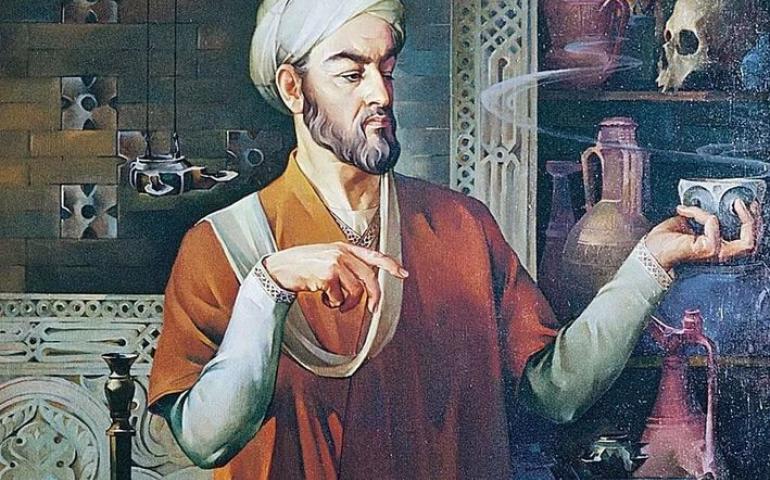
Abu Ali ibn Sina (Avicenna) was born around 980 in the village of Afshana, near Bukhoro, into a family of officials. By the age of eighteen, he had mastered the knowledge of his time, including medicine. He dedicated much of his time to studying literature across various fields of science and technology, particularly in the renowned Samanid library. His access to this library was granted as a result of his successful treatment of Emir Nuh ibn Mansur Smani. The extensive reading and research he conducted there played a crucial role in shaping his intellectual development.
During this period, Ibn Sina led an exceptionally active life. He practiced medicine, taught students, and served as the vizier to the ruler of Hamadan, all while authoring numerous scholarly works. As one of the most influential Tajik-Persian polymaths, he holds a distinguished place in the history of human civilization, making significant contributions to fields such as philosophy, medicine, and the natural sciences.
His book, Al-Qanun fi al-Tibb (The Canon of Medicine), is regarded as one of the most significant works in medical science. For six centuries, it served as a fundamental guide for physicians and a primary textbook in medical schools across Europe. Al-Qanun was published multiple times in Europe, translated into Latin and various other languages. Although Ibn Sina sought to align some of his philosophical ideas with the principles of Sharia, this attempt led to elements of dualism and apparent indecision in his thought. Nevertheless, his philosophical views were considered among the most advanced within the Peripatetic tradition. Contrary to religious doctrines on the creation of the world, he upheld the concept of the world's eternity. In opposition to theological determinism, he advocated for the principle of causality in nature.
At the same time, he acknowledged his own existence as a rational being and did not fully adhere to the prevailing symbolic interpretations of numbers or other esoteric beliefs of his era, maintaining a dualistic perspective in his philosophical approach.
Safarova M.J.- senior lecturer at the department of social subjects