

ACADEMIC MOBILITY IN THE DEPARTMENT OF MICROBIOLOGY, IMMUNOLOGY, AND VIROLOGY
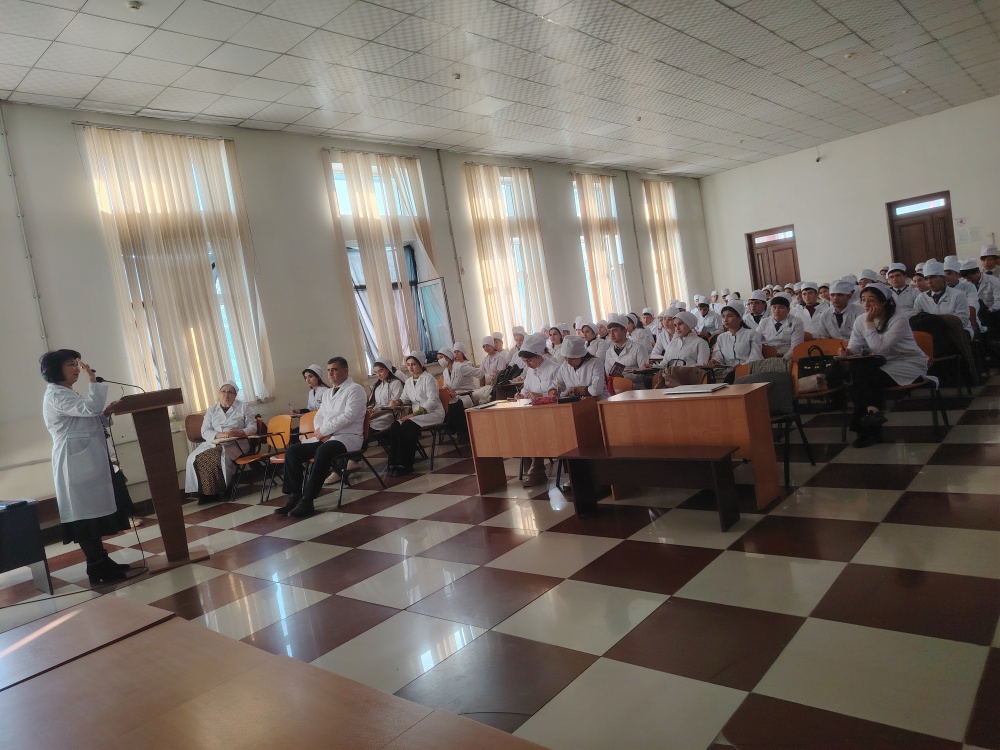
On November 26, as part of the academic mobility cooperation between Marat Ospanov West Kazakhstan Medical University and Abu Ali ibn Sina State University of Medical Sciences of Kazakhstan, a seminar was conducted for the teaching staff of the Department of Microbiology, Immunology, and Virology. The seminar focused on innovative teaching technologies for students.
The keynote lecture was delivered by Dr. Saulesh Seitzhanovna, M.Sc., Head of the Department of Microbiology, Virology, and Immunology at Marat Ospanov West Kazakhstan Medical University.
Seminar Theme: Innovative Approaches to Teaching Microbiology with an Emphasis on Team-Based Learning (TBL)
Objective of the Seminar:
The exchange of experiences and practical methods for implementing innovative teaching technologies, with a particular focus on Team-Based Learning (TBL) as a contemporary approach to active student engagement, was emphasized.
Sailesh Seytzhanovna visited Avicenna Tajik State Medical University as part of the academic mobility program, aimed at fostering professional exchange and enhancing inter-university collaboration within the region.
The seminar was attended by faculty members, early-career specialists, graduate students, and senior undergraduates.
The primary topics of discussion during the seminar included:
1. Advantages of Team-Based Learning (TBL) in Microbiology Education
Structured Approach of TBL: Includes student preparation, teamwork, and case-based discussion and analysis.
Practical Applications: Examples of implementing TBL methodology in the educational process.
Teacher’s Role: Acting as a facilitator and moderator to guide the learning process effectively.
2. Innovative Approaches to Teaching Microbiology
Interactive Technologies: Incorporating online platforms, testing systems, and virtual laboratories to enhance engagement.
Hybrid Methodologies: Combining TBL with traditional teaching methods to optimize learning outcomes.
3. Case Studies in Microbiology
Focused Topics: Designing case studies on antibiotic resistance, infection control, and disease diagnosis.
Collaborative Problem Solving: Facilitating real-time group activities for students to address practical microbiological challenges.
Results of the Event:
Participants developed a comprehensive understanding of the Task-Based Learning (TBL) method and its potential applications in educational practices.
Faculty members emphasized the significance of innovative pedagogical approaches in fostering critical thinking and enhancing teamwork skills among students.
Sailesh Seytzhanovna proposed fostering inter-university collaboration, including the development of joint teaching materials and the organization of collaborative academic seminars.
Purpose of the Lecture:
The objective of the lecture was to provide students with up-to-date information on the pathogens responsible for infectious diseases, their biological characteristics, and their role in contemporary medicine. The lecture aimed to enhance the knowledge of students, graduate students, and faculty members in the field of infectious microbiology.
Following the lecture, Kurmangalieva S.S. led an open discussion, during which participants had the opportunity to inquire about the resistance of mycobacteria, contemporary challenges in vaccination against pertussis and diphtheria, and emerging approaches to the treatment of these infections.
Results of the Event:
Students and faculty members acknowledged the high scientific value and practical relevance of the lecture.
Participants gained an expanded understanding of bacterial infections, as well as their prevention and treatment.
The lecture served as a successful example of knowledge exchange within the framework of the academic mobility program.
Feedback from Participants:
"The lecture was comprehensive and informative, particularly the insights into modern diagnostic methods for mycobacteria."
"The discussion on Bordetellae was particularly valuable, especially in the context of the importance of vaccination."
"The material was excellently structured, and the approach to the topic was highly professional."
The lecture reinforced scientific collaborations between universities and represented a key milestone in the development of academic mobility. Kurmangalieva S.S.'s presentation allowed participants to deepen their expertise in microbiology, thereby fostering professional growth and enhancing scientific potential.
Translated by translated by Ismoilov R.